
Umami is the fifth basic taste, alongside sweet, salty, sour, and bitter. It comes from our perception of glutamate, a substance naturally found in many foods. In pure fish sauce, umami develops during the fermentation of fish and salt. As fish proteins gradually break down into amino acids, they create a rich, well-rounded depth of flavor that goes far beyond saltiness alone.
Have you ever noticed how some dishes use only a few seasonings yet somehow taste perfectly balanced—aromatic, savory, and increasingly complex with every bite? The secret does not always lie in adding more salt or more seasoning. Instead, it often comes down to choosing ingredients and condiments that help bring different flavors together in harmony.
Pure fish sauce has long played this essential role in Thai cuisine. Its distinctive character develops gradually throughout the natural fermentation process rather than relying on additives to create flavor. When a premium-grade first-press pure fish sauce is used, with its concentrated taste and distinctive aroma, it can bring out the natural character of each ingredient while keeping the overall flavor beautifully balanced.
In this article, we explore the science behind the fifth taste, how fish proteins are transformed into savory compounds, and why choosing premium-grade first-press pure fish sauce from Squid Brand, produced through a carefully controlled process, can be an important key to elevating your favorite dishes with greater aroma, depth, and flavor complexity.
What Is Umami? The Science Behind the Fifth Taste in Pure Fish Sauce
Umami is a Japanese word commonly translated as “pleasant savory taste” or “deliciousness.” It is internationally recognized as the fifth basic taste, alongside sweet, salty, sour, and bitter.
Umami was first scientifically identified by Professor Kikunae Ikeda while studying kombu seaweed broth. He discovered that the substance responsible for this distinctive taste was glutamic acid, an amino acid that activates taste receptors on the tongue. These receptors send signals to the brain that we perceive as a deep, savory sensation clearly different from the other four basic tastes.
One of umami’s special characteristics is its ability to enhance other flavors and make food taste smoother and more satisfying. Naturally occurring umami can be found in ripe tomatoes, mushrooms, meat, aged cheeses, and fermented foods.
When it comes to pure fish sauce, allowing fish and salt to ferment naturally over an extended period gradually breaks down fish proteins into peptides and free amino acids, including glutamate—one of the key components responsible for savory flavor.
This process creates a taste profile that offers much more than saltiness alone. It explains why naturally fermented fish sauce can add depth and balance while enhancing the authentic flavors of ingredients, without relying on added MSG to create umami.
The umami naturally present in pure fish sauce is therefore the result of a remarkable fermentation process. Free amino acids released from fish proteins contribute richness, complexity, and a fuller savory character to food.
Understanding this process helps explain why carefully fermented, high-quality fish sauce delivers a deeper and more refined flavor experience than simple saltiness.
The Science of Glutamic Acid and Umami Compounds
At the heart of umami’s rich, savory character is glutamate, a naturally occurring form of glutamic acid found in many foods.
When glutamate comes into contact with specific taste receptors on the tongue, the brain recognizes a fuller, deeper savory sensation that makes food taste more balanced and satisfying.
Other compounds, including IMP and GMP, can further enhance the perception of umami. When combined with glutamate, they can intensify the savory sensation and create an even more rounded flavor experience.
This is one reason why aged or fermented ingredients such as meat, mushrooms, and pure fish sauce can deliver remarkable depth of flavor without depending on excessive saltiness.
Umami Is More Than Saltiness
Although saltiness and umami often appear together in food, they are distinct tastes.
Saltiness is the direct sensation produced primarily by salt, while umami creates a deeper savory sensation that helps connect the flavors of individual ingredients and gives food a more complete, full-bodied taste.
This is why adding salt and adding pure fish sauce do not produce the same result.
Salt mainly increases saltiness. Fish sauce, on the other hand, contributes not only saltiness but also natural umami and distinctive fermented aromas. These qualities can enhance the flavor of meat, vegetables, soups, and sauces without overpowering the ingredients themselves.
The science of glutamic acid and umami compounds therefore demonstrates that delicious flavor is not simply about intensity. It comes from the interaction of naturally occurring molecules that work together to create greater depth, balance, and complexity.
How Does Umami Develop in Pure Fish Sauce?
Umami in pure fish sauce does not appear instantly. It gradually develops as fish and salt undergo natural fermentation.
Over time, fish proteins are transformed into amino acids and other compounds that contribute to the characteristic savory taste, aroma, and complexity of fish sauce.
From Fish Protein to Savory Amino Acids
The foundation of umami begins with the proteins naturally present in fish.
During fermentation, these proteins gradually break down into smaller components, including peptides and free amino acids. Among them is glutamate, one of the key compounds associated with umami.
This transformation gradually changes fish sauce from something that is simply salty into a condiment with greater depth, complexity, and savory richness.
Fermentation time, raw materials, and process control all play important roles in shaping the final flavor.
Properly fermented pure fish sauce achieves a balance between saltiness and umami, allowing it to enhance food without masking the original character of the ingredients.
Aroma and Flavor Develop Together During Fermentation
As proteins are transformed during fermentation, other chemical reactions also take place, producing volatile compounds responsible for fish sauce’s distinctive aroma.
These aromatic compounds work together with umami to create a harmonious sensory experience. As a result, carefully fermented fish sauce can deliver both a refined aroma and a smooth, well-rounded flavor at the same time.
The umami found in pure fish sauce is therefore the result of both traditional wisdom and natural biochemical processes working together.
It delivers more than simple saltiness. It brings aroma, savory depth, and complexity that can elevate a wide variety of dishes and allow their natural flavors to stand out.
Is Umami from Fermentation the Same as MSG?
Although naturally fermented umami and monosodium glutamate, or MSG, can stimulate taste receptors in similar ways, their origins and overall flavor profiles are quite different.
Natural umami found in pure fish sauce and other fermented foods does not come from glutamic acid alone. It is accompanied by other amino acids, peptides, and aromatic compounds that develop through the natural breakdown of proteins during fermentation. Together, these components create a flavor that is more rounded, complex, and deeply savory.
MSG, on the other hand, is the sodium salt of glutamic acid. It provides a concentrated source of glutamate but does not contain the broader range of flavor compounds naturally created through fermentation.
For this reason, umami developed through fermentation can be especially suitable for dishes that aim for a naturally well-balanced and complex flavor profile, while also bringing the distinctive character of fermented ingredients to the dish.
Benefits of Umami in Elevating Your Favorite Dishes
Umami does more than simply make food taste more delicious. It helps bring the flavors of different ingredients together, creating greater harmony, balance, and depth.
This makes umami valuable in both simple everyday meals and dishes where careful attention is paid to flavor complexity.
- Creates a fuller and more balanced taste
Umami helps prevent flavors from tasting flat or overly dominated by one particular taste. - Enhances the natural flavors of ingredients
Whether in meat, vegetables, mushrooms, soups, or sauces, umami can make the original flavors of each ingredient feel richer and more pronounced. - Helps different flavors work together harmoniously
Salty, sweet, sour, and other flavor elements can feel more naturally integrated when umami is present. - Adds depth without relying on saltiness alone
This is especially true when using pure fish sauce, which combines umami with the aroma and flavor compounds naturally developed through fermentation.
The appeal of umami lies in its ability to make food taste fuller, smoother, and more harmoniously balanced.
In particular, umami from pure fish sauce comes together with the distinctive aromas and flavors created during fermentation, allowing it to add greater depth and complexity than saltiness alone.

Squid Brand Gold and Premium-Grade First-Press Pure Fish Sauce
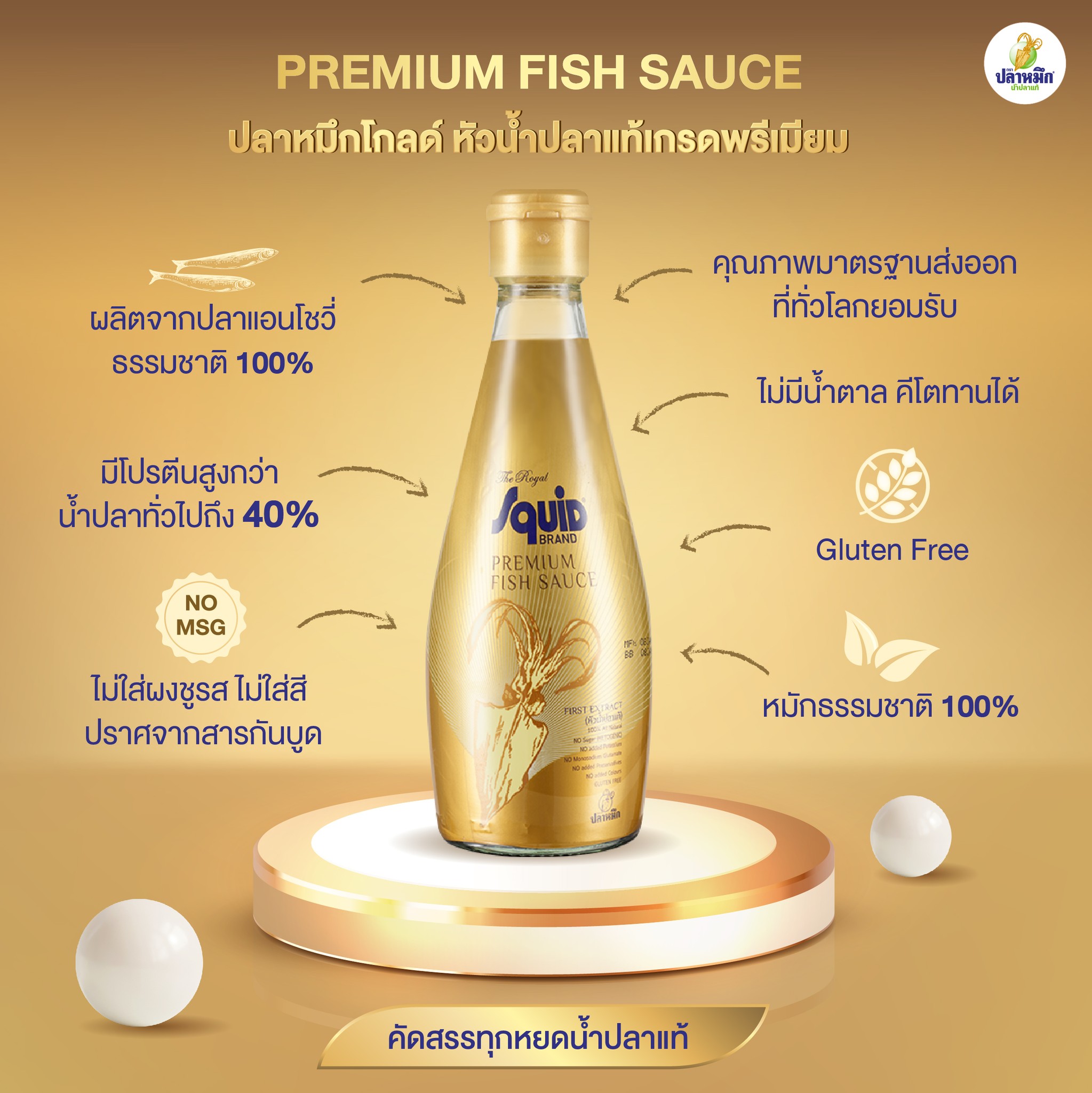
Squid Brand Gold is carefully fermented using high-quality anchovies combined with salt in an appropriate ratio before undergoing a natural fermentation process.
The result is a premium-grade first-press pure fish sauce with a distinctive aroma, rich flavor, and well-rounded savory character, making it ideal for those who want to elevate their dishes beyond the taste of ordinary fish sauce.
Another key characteristic of Squid Brand Gold is its commitment to preserving the natural character of traditionally fermented fish sauce.
Each bottle is produced under internationally recognized manufacturing standards, including GMP and HACCP, and is properly registered with the Thai Food and Drug Administration.
The product contains no preservatives, no added MSG, no artificial coloring, and no added flavoring. Consumers can therefore enjoy its naturally developed flavor profile, together with amino acids formed through the fermentation process that help enhance the taste of food.
Whether used in soups, stir-fries, marinades, or simply drizzled over a finished dish to enhance its aroma, this premium-grade first-press pure fish sauce can serve as a key seasoning for creating deeper, more harmonious flavors.
Every drop helps bring the different elements of a dish together while adding a rich savory character to both everyday meals and special dishes.
Conclusion
Umami is a basic taste that adds depth, fullness, and balance to food.
In pure fish sauce, umami develops naturally during the fermentation of fish and salt. As fish proteins gradually break down into amino acids and flavor compounds, fish sauce develops a character that goes beyond simple saltiness and can help bring out the natural flavors of ingredients in a well-balanced way.
For those looking to experience the flavor of premium natural fermentation, Squid Brand Gold is another noteworthy option.
Its premium-grade first-press pure fish sauce is naturally fermented to deliver a rich, aromatic, and well-rounded flavor profile. It also contains no added MSG, preservatives, artificial coloring, or added flavoring.
This makes it suitable for enhancing both simple everyday dishes and more elaborate meals with greater depth, balance, and savory complexity.
FAQ
Q: How does umami develop in pure fish sauce?
A: Umami develops as fish proteins are naturally broken down by enzymes during the long fermentation process with salt. This releases free amino acids, including glutamate, which contribute to the characteristic savory and well-rounded taste.
Q: Is naturally occurring umami safe to consume?
A: Naturally occurring umami compounds are commonly found in many foods and fermented ingredients. In pure fish sauce, these compounds develop naturally as proteins are broken down into amino acids during fermentation.
Q: Why does naturally fermented fish sauce have a more complex flavor than ordinary fish sauce?
A: Traditional fermentation allows amino acids, peptides, and aroma compounds to develop gradually over time. These components work together to create greater depth, aroma, and savory complexity, especially in fish sauce made without added coloring, preservatives, or artificial flavoring.