
When following a traditional Chinese vegetarian festival diet, the key principle is to avoid meat, seafood, eggs, milk, and other animal-derived products. This also includes seasonings made from animal ingredients, such as fish sauce, shrimp paste, and oyster sauce.
Traditionally, five pungent vegetables are also avoided: garlic, onions, Chinese scallions, chives, and tobacco leaves. Plant-based seasonings should therefore be selected as suitable substitutes for different dishes.
Many people may think that following a vegetarian festival diet simply means avoiding meat. In reality, however, there are many hidden ingredients and components that require closer attention.
Animal-derived ingredients may be found in soup stocks, seasoning sauces, curry pastes, or processed foods even when no visible pieces of meat are present. Understanding which ingredients and seasonings are suitable before getting started can help ensure that every meal follows the intended dietary principles.
For those who enjoy cooking at home, preparing essential vegetarian-friendly seasonings in advance can make it much easier to transform everyday dishes into suitable vegetarian meals. These may include soy sauce, plant-based sauces, or alternatives such as vegetarian fish sauce or vegan fish sauce, which can replace conventional fish sauce in Thai cooking.
This article explores which foods and ingredients should be avoided, which seasonings may require careful label checking, and how plant-based alternatives can provide both saltiness and balanced savory flavor. With the right choices, every meal during the vegetarian festival can remain delicious while giving you greater confidence in every step of preparation.
What Is Chinese Vegetarian Festival Food, and How Is It Different from Vegetarian and Vegan Diets?
Chinese vegetarian festival food, commonly known in Thailand as “Jay” food, is prepared without meat or any animal-derived products, including eggs, milk, and seafood.
Traditional Jay dietary practices also exclude certain pungent vegetables, including garlic, onions, Chinese scallions, chives, and tobacco leaves. This means that following a Jay diet involves more than simply choosing vegetables or plant-based foods. Ingredients and seasonings must also be checked carefully.
A vegetarian diet primarily excludes meat, although some forms may still allow eggs, milk, or dairy products.
A vegan diet, on the other hand, avoids all animal-derived foods, making it similar to a Jay diet in some respects. However, vegans can generally consume garlic, onions, and other pungent vegetables without restriction.
Although Jay, vegetarian, and vegan diets may appear similar, their requirements differ in several important ways.
Those who wish to follow the traditional Jay diet strictly should check both ingredients and seasonings carefully. Some dishes may contain no visible meat but still include fish sauce, oyster sauce, eggs, milk, or restricted pungent vegetables.
What Foods Should Be Avoided During the Vegetarian Festival?
Before beginning a Jay diet, it is important to understand that the practice involves more than avoiding meat. It also includes animal-derived products, certain pungent vegetables, and some types of food and beverages.
Understanding these restrictions can help ensure that the practice of abstaining from animal products and observing the spiritual principles of the festival is followed as closely as intended.
Meat and All Animal-Derived Products
The primary rule of a Jay diet is to avoid all types of meat, including pork, chicken, beef, fish, and seafood.
This also includes processed foods and ingredients made from animals, such as eggs, milk, butter, cheese, honey, gelatin, and broth made from animal bones.
Traditionally, this practice is associated with avoiding harm to living creatures while also encouraging a simpler way of eating.
Five Pungent Vegetables
According to traditional Jay dietary practices, five pungent or strongly aromatic plants are avoided: garlic, onions, Chinese scallions, chives, and tobacco leaves.
Traditional beliefs hold that these ingredients may stimulate the body and emotions, potentially interfering with calmness and meditation.
Garlic and onions deserve particular attention because they are commonly used as base ingredients in curry pastes, sauces, soups, and processed foods, even when they are not visibly present in the final dish.
For this reason, ingredient labels should always be checked before purchasing.
Strongly Flavored Foods and Alcoholic Beverages
In addition to avoiding meat and pungent vegetables, traditional observance also includes abstaining from alcoholic beverages and excessively strong flavors, such as foods that are extremely spicy, sour, salty, or sweet.
The purpose is to encourage moderation rather than excessive indulgence.
Choosing milder and more balanced dishes may also make meals easier to enjoy throughout the festival period.
In summary, when asking what foods should be avoided during the vegetarian festival, the key principles are to avoid meat and animal-derived ingredients, exclude the five pungent vegetables, and select foods and beverages that align with the traditional practice.
Most importantly, always check ingredient labels and seasonings carefully, as non-Jay ingredients may be hidden in foods more often than expected.
Which Seasonings May Look Vegetarian but Should Be Checked Before Use?
Choosing seasonings during the vegetarian festival requires particular care because many everyday products may contain hidden animal-derived ingredients or restricted pungent vegetables.
Even when the packaging looks simple or plant-based, it is important to check the ingredient list carefully.
Choosing dedicated alternatives such as vegetarian fish sauce and other clearly labeled Jay seasonings can help reduce the risk of accidentally using unsuitable ingredients.
Regular Fish Sauce
Conventional fish sauce may look like a simple brown salty liquid, but it is traditionally produced by fermenting fish with salt.
Because it is made from animal ingredients, it is not suitable for Jay dishes.
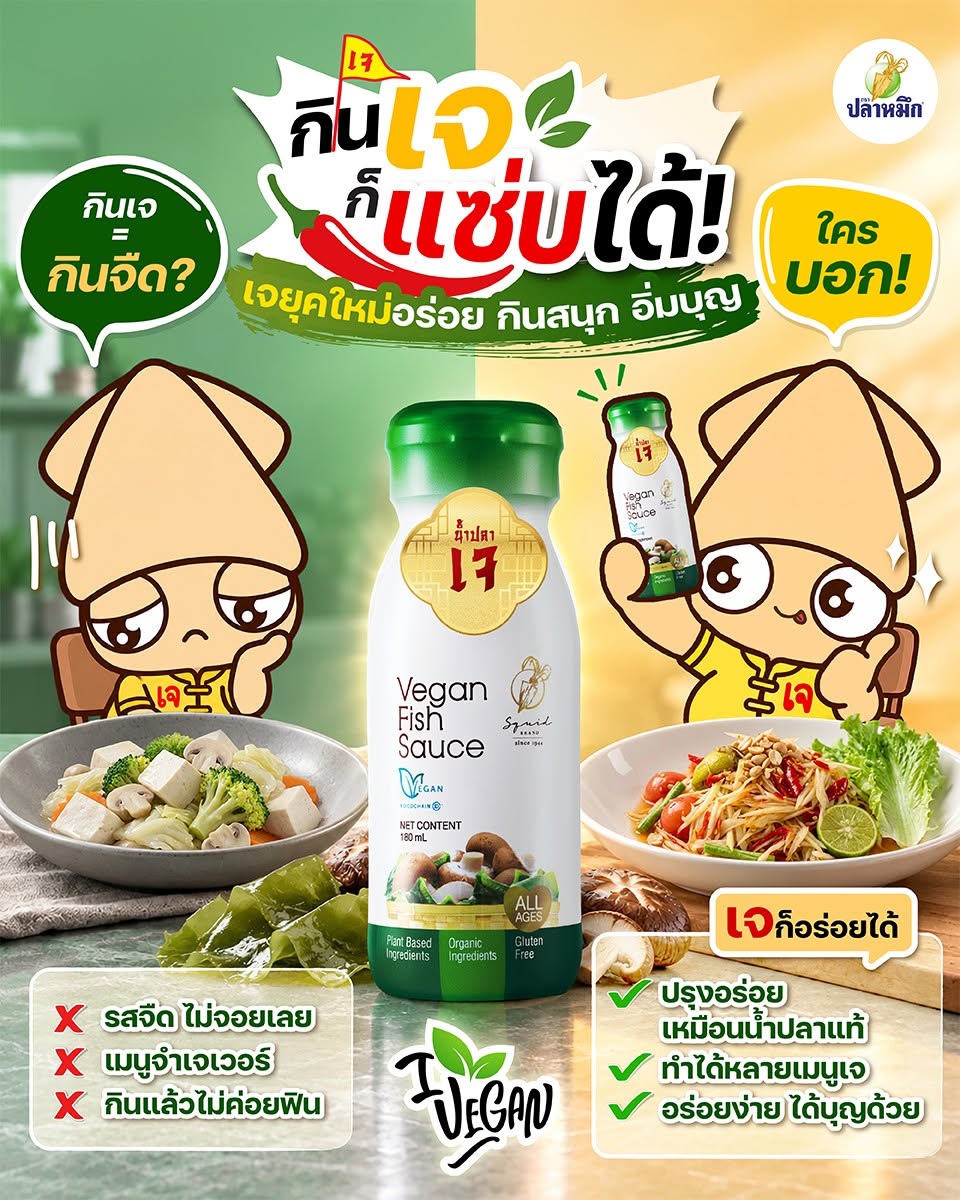
A better alternative is vegetarian fish sauce or vegan fish sauce made from plant-based ingredients. These products are designed to provide a savory and salty flavor similar to conventional fish sauce while remaining free from animal-derived ingredients.
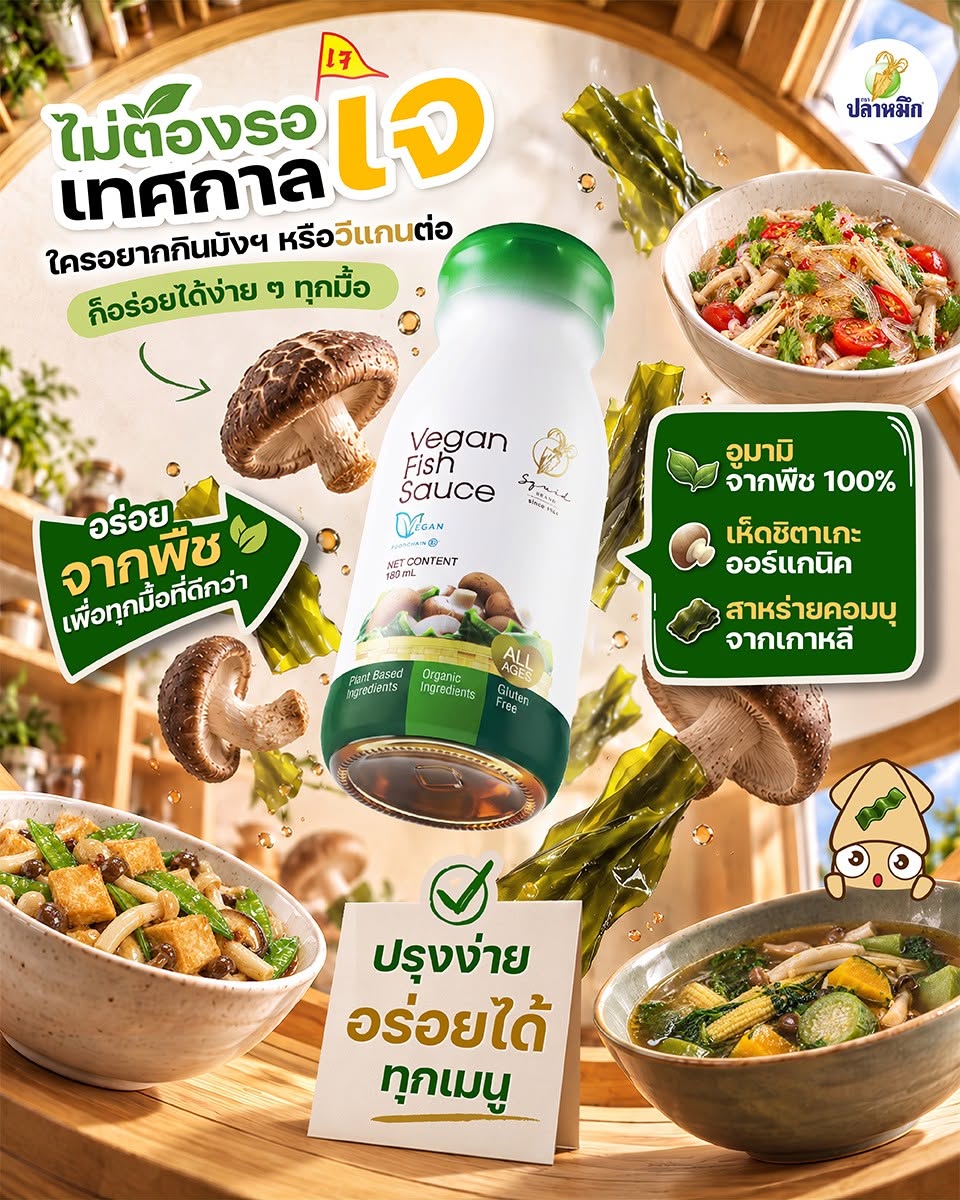
For those looking for a plant-based seasoning that can add savory flavor and balance to Jay dishes, Squid Brand Vegan Fish Sauce offers another alternative.
It is made from selected plant-based ingredients and produced through a carefully controlled process. It contains no preservatives, no added MSG, no artificial coloring, and no added flavoring.
It can help add umami and gentle saltiness to stir-fries, soups, curries, and dipping sauces while keeping the dish free from fish-based ingredients.
Oyster Sauce
Oyster sauce has a thick texture and rich savory flavor, making it popular for stir-fries and marinades.
However, traditional oyster sauce is made with oyster extract and is therefore not suitable for Jay cooking.
Instead, look for vegetarian seasonings such as mushroom sauce or specifically labeled vegetarian seasoning sauces.
Shrimp Paste and Ready-Made Curry Pastes
Shrimp paste and many traditional Thai ready-made curry pastes often contain dried shrimp, fish, or shrimp paste to intensify their flavor and aroma.
If preparing Jay curry or chili paste, choose products specifically labeled as vegetarian or Jay-friendly.
Another option is to prepare curry paste from scratch using plant-based ingredients to ensure that no animal-derived components are included.
Seasoning Powders and Stock Cubes
Many seasoning powders and ready-made stock cubes use extracts from chicken, pork, beef, or animal bones as the base for savory flavor.
Even products labeled with vegetable-inspired flavors may still contain animal-derived ingredients.
For this reason, always read the ingredient list carefully before purchasing.
Ready-Made Sauces and Salad Dressings
Different types of ready-made sauces, creamy dressings, and even some clear salad dressings may contain egg yolk, milk, butter, fish sauce, or animal-derived extracts.
When choosing these products, look for clearly labeled vegetarian, Jay, or vegan options to make sure they suit your dietary requirements.
A seasoning that appears vegetarian is not necessarily suitable for Jay consumption.
The most important step is to read ingredient labels carefully and choose clearly identified vegetarian or Jay seasonings. This helps reduce uncertainty while allowing every dish to remain balanced and flavorful.
What Is Vegetarian Fish Sauce Made From, and Why Can It Replace Regular Fish Sauce?
Vegetarian fish sauce or vegan fish sauce is a seasoning made without fish or other animal-derived ingredients.
Instead, it uses plant-based ingredients that help create savory flavor, such as seaweed, mushrooms, soybeans, or fermented plant ingredients.
Its main advantage is that it can often be used in much the same way as conventional fish sauce, whether in soups, stir-fries, curries, broths, or dipping sauces, while remaining suitable for diets that avoid animal-derived ingredients.
These products are designed to provide more than saltiness alone.
Fermented plant ingredients and naturally savory compounds can create greater depth and aroma, making them suitable for Thai dishes and many other recipes that would traditionally use conventional fish sauce.
Vegetarian fish sauce therefore serves as an alternative for replacing both the saltiness and savory character of regular fish sauce.
By using plant-based ingredients instead of fish, it can be suitable for those following Jay, vegetarian, or vegan diets who still want familiar savory flavors in their meals.
With the right plant-based seasoning, Jay and vegan dishes can remain aromatic, balanced, and satisfying without relying on animal-derived ingredients.
Vegetarian Seasonings: Essential for Creating Balanced Flavor
When avoiding meat and traditional fish sauce, choosing the right vegetarian seasonings becomes essential for keeping food flavorful and satisfying.
Common seasonings such as light soy sauce or salt may provide saltiness, but they cannot fully replace the depth and distinctive aroma traditionally associated with fish sauce. This is where a plant-based alternative such as vegan fish sauce can help bring greater balance and savory complexity to the dish.
Even during the vegetarian festival, there is no reason for food to become bland. By choosing a quality alternative such as Squid Brand Vegetarian Fish Sauce / Vegan Fish Sauce, you can continue enjoying your favorite soups, stir-fries, curries, and flavorful dipping sauces while keeping the dishes free from animal-derived ingredients.
How to Choose Vegetarian Seasonings and What to Check on the Label
When choosing vegetarian seasonings, it is important not to rely only on the product name or the image on the packaging. Some formulas may still contain animal-derived ingredients or pungent vegetables that are traditionally avoided during the vegetarian festival.
The simplest approach is to read the label carefully and make sure the product is free from animal-derived ingredients and restricted pungent vegetables.
- Look for vegetarian or vegan labels
Check for a vegetarian symbol or clear wording that identifies the product as vegetarian, vegan, or free from animal-derived ingredients. - Check carefully for animal-derived ingredients
Read the ingredient list on the back of the packaging to make sure it does not contain fish, shellfish, eggs, milk, or other animal-based extracts. - Check for pungent vegetables in sauces and ready-made seasonings
Pay particular attention to seasoning sauces and curry pastes, as they may contain garlic, onions, or other pungent vegetables traditionally avoided in a strict Jay diet.
In summary, choosing suitable vegetarian seasonings means checking the label for three key things: vegetarian or vegan identification, animal-derived ingredients, and pungent vegetables that may be hidden in the recipe.
Spending just a little more time reading the label can make it easier to choose seasonings that align with traditional vegetarian festival practices and give you greater confidence when preparing your favorite meals.
Squid Brand Vegetarian Fish Sauce: A Key Ingredient for Balanced Flavor
Creating delicious Jay and vegetarian dishes is easier with the right seasoning.
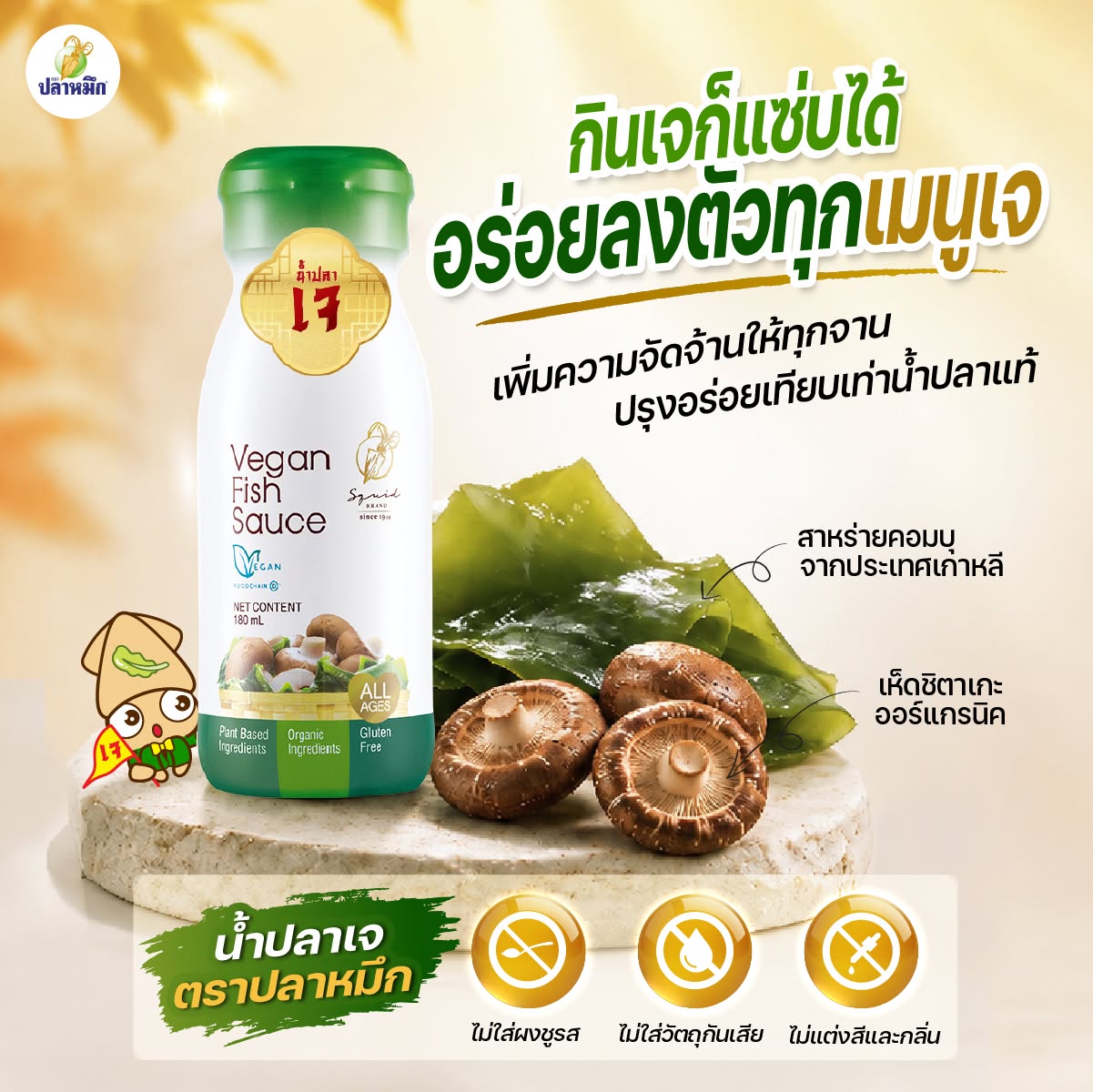
Squid Brand Vegetarian Fish Sauce has been developed as a plant-based alternative for health-conscious consumers, as well as those following Jay, vegetarian, vegan, or meat-free diets.
It is designed to provide a rich yet naturally balanced flavor and aroma that can enhance food in a similar way to conventional fish sauce.
One of the key strengths of this vegetarian fish sauce is the careful selection of plant-based ingredients and its controlled production process.
It is produced under recognized manufacturing and food safety standards, including GMP and HACCP, and is properly registered with the Thai Food and Drug Administration.
The product contains no preservatives, no added MSG, no artificial coloring, and no added flavoring.
It delivers naturally savory flavor that helps provide balanced saltiness and greater depth without overpowering the original flavors of vegetables, mushrooms, or other ingredients in the dish.
Whether used for soups, stir-fries, curries, marinades, or dipping sauces, this vegetarian fish sauce can help bring different flavors together more harmoniously.
It also gives those following a Jay diet greater confidence in preparing flavorful dishes without relying on prohibited animal-derived ingredients.
Conclusion
Following a vegetarian festival diet becomes much easier when you understand which ingredients should be avoided and prepare suitable alternatives in advance.
Choosing reliable vegetarian seasonings, vegetarian fish sauce, or vegan fish sauce can help keep every dish flavorful, balanced, and aligned with traditional dietary practices.
Paying attention to every step, from selecting ingredients to preparing the final dish, can make the vegetarian festival period more enjoyable and satisfying while supporting a varied and balanced diet.
FAQ
Q: What is the difference between Jay food and vegetarian food?
A: A traditional Jay diet is generally more restrictive. It excludes all animal-derived ingredients as well as five pungent vegetables. Some forms of vegetarian diets, however, may still include milk, eggs, garlic, or onions.
Q: What is vegetarian fish sauce made from, and why does it taste savory and salty?
A: Vegetarian fish sauce is typically made from plant-based ingredients such as soy-derived ingredients, mushrooms, or other fermented plant sources. Fermentation and naturally occurring savory compounds can create amino acids and umami notes that provide a balanced salty and savory flavor.
Q: Why are five pungent vegetables avoided during the vegetarian festival?
A: According to traditional religious and cultural beliefs, these pungent vegetables are thought to stimulate the body and emotions, making it more difficult to maintain calmness and concentration during spiritual practice.
Q: Can you eat garlic, onions, or spring onions during the vegetarian festival?
A: Under traditional Jay dietary practices, garlic and members of the onion family are avoided. This commonly includes onions, shallots, white onions, spring onions, and their leaves, together with Chinese scallions, chives, and tobacco leaves.