
As health-conscious and plant-based lifestyles continue to grow, more people are reducing their consumption of meat — whether for health, environmental, spiritual, or personal reasons. However, many consumers still feel confused about the differences between J-Food, Vegan, and Vegetarian diets, as they may sound similar but actually have different dietary rules.
One of the biggest challenges is finding a seasoning that still delivers the familiar umami taste without containing any animal-derived ingredients. This is especially important in Thai cooking, where fish sauce plays a key role in adding aroma, depth, and well-rounded flavor.
In this article, we’ll clarify the differences between J-Food, Vegan, and Vegetarian diets, and introduce a new seasoning alternative that helps make plant-based meals more flavorful: plant-based fish sauce, also known as J-Food fish sauce or Vegan fish sauce. It is designed to deliver a savory, well-balanced taste close to naturally fermented real fish sauce, without using animal ingredients.
What’s the Difference Between J-Food vs Vegan vs Vegetarian?
Although all three diets avoid meat, each group has different dietary restrictions based on their beliefs, lifestyle, and personal goals.
J-Food
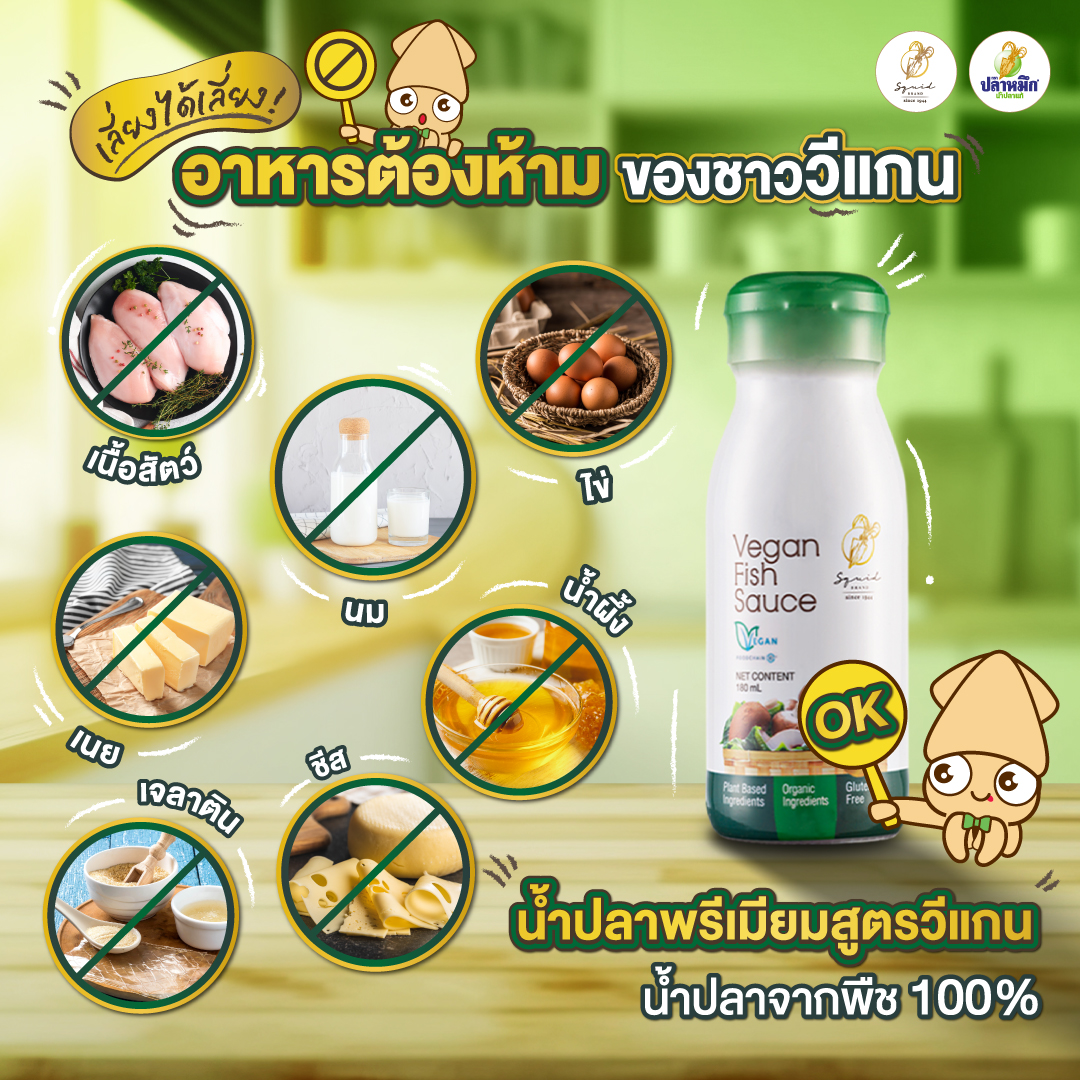
J-Food is often associated with spiritual practice and self-discipline. It is one of the strictest forms of plant-based eating. People who follow a J-Food diet avoid all types of meat and animal-derived products, including milk, eggs, and animal fats.
In addition, J-Food also excludes five pungent vegetables: garlic, onion, Chinese garlic, chives, and tobacco leaves. These ingredients are traditionally believed to stimulate emotions and affect the body’s inner balance.
For this reason, seasonings for J-Food must be carefully selected to ensure they contain no animal ingredients and no prohibited pungent vegetables. A J-Food fish sauce made from natural plant-based ingredients is therefore a suitable choice for those who want to enjoy flavorful meals while staying true to the J-Food lifestyle.
Vegan
Veganism is a lifestyle based on reducing harm to animals as much as possible. It is not limited to food alone, but can also extend to everyday product choices.
Vegans avoid all meat and animal-derived products, including milk, eggs, butter, and even honey. However, unlike J-Food, vegans can eat pungent vegetables such as garlic and onion because the main focus is animal rights and environmental responsibility, not religious or spiritual restrictions.
Therefore, vegan seasonings must be made from 100% plant-based ingredients and contain no animal-derived components.
Vegetarian
Vegetarianism is the most flexible among the three groups. Vegetarians avoid meat, including land animals and seafood, but some groups may still consume dairy products or eggs.
For example, some vegetarians follow a lacto-vegetarian diet and still consume milk, while others follow an ovo-vegetarian diet and still consume eggs. Some may consume both.
Vegetarians can also eat pungent vegetables as usual. This makes vegetarian eating more flexible and easier for those who want to gradually reduce meat consumption for health reasons without following very strict rules.
Quick Summary: J-Food vs Vegan vs Vegetarian
In simple terms, all three groups avoid meat, but their restrictions are different.
J-Food is the strictest. It avoids meat, animal-derived products such as milk and eggs, and the five pungent vegetables.
Vegan avoids all meat and animal-derived products, including honey, and may also avoid animal-related products in daily life. However, vegans can eat pungent vegetables.
Vegetarian focuses mainly on avoiding meat, but some vegetarians may still consume milk or eggs.
No matter which group you belong to, Vegan Fish Sauce from Squid Brand can be a seasoning option that supports J-Food, Vegan, and Vegetarian diets. It helps bring back the familiar umami taste and aroma similar to naturally fermented real fish sauce, making plant-based meals more complete and enjoyable.
The Big Problem: Fish Sauce, a Staple Thai Seasoning That Plant-Based Eaters Must Be Careful With
Fish sauce is one of the essential seasonings in Thai cuisine. However, regular fish sauce is traditionally made by fermenting anchovies, which means it is not suitable for J-Food, Vegan, or strict Vegetarian diets.
For many people who avoid meat, cooking Thai food without fish sauce can be difficult. The dish may lose its familiar aroma, depth, and authentic flavor.
Some people try to replace fish sauce with soy sauce or salt. While these options can add saltiness, they cannot fully replace the unique aroma and umami taste of traditional fish sauce. This is especially noticeable in dishes such as som tam, spicy salads, nam tok, soups, and curries, where fish sauce plays a key role in building flavor.
This is why Vegan fish sauce becomes an important alternative. It helps bring back the soul of Thai cuisine while allowing health-conscious and plant-based eaters to enjoy their meals without compromising their values.
A New Alternative: A Seasoning That J-Food vs Vegan vs Vegetarian Consumers Can All Enjoy
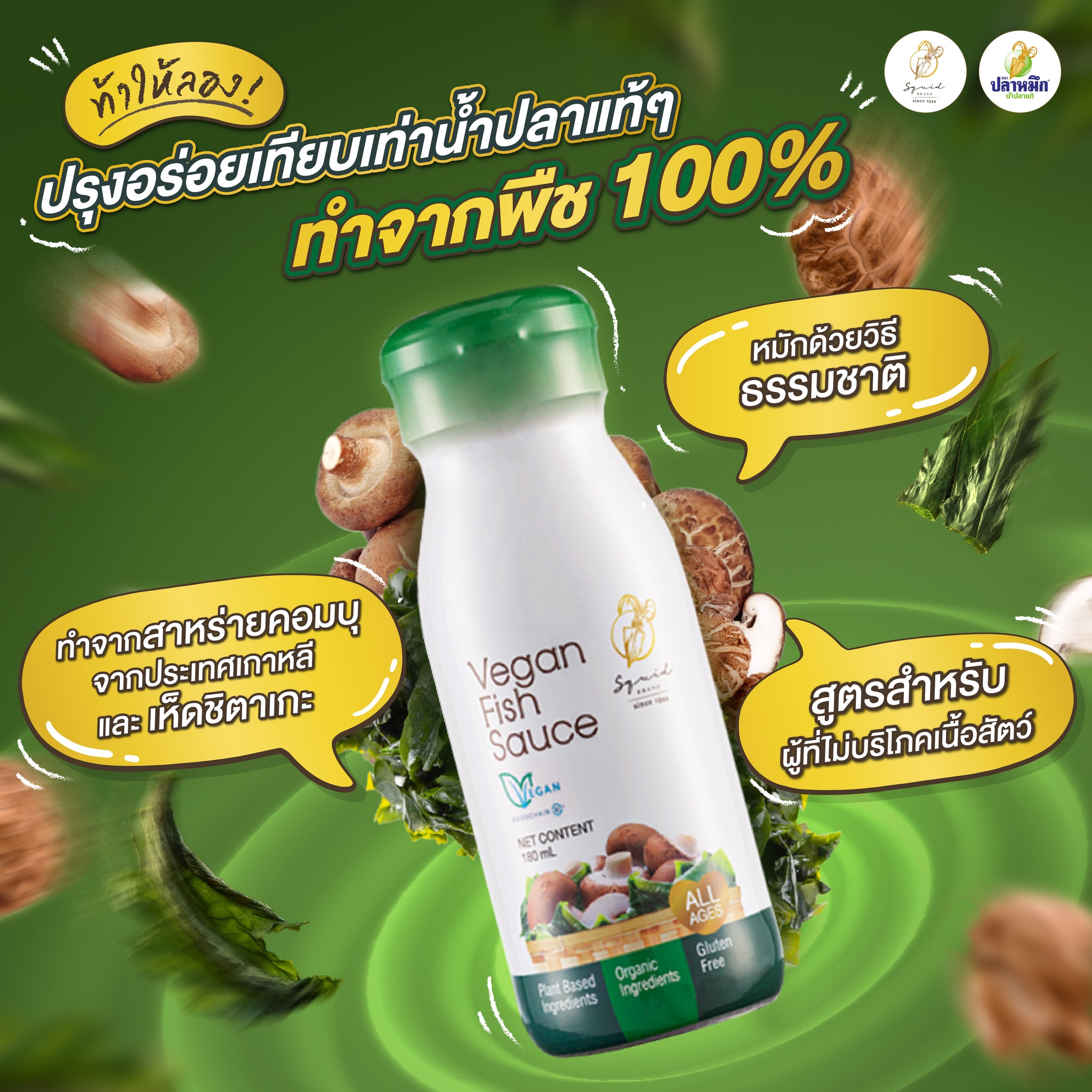
Squid Brand Vegan Fish Sauce is a plant-based seasoning created especially for J-Food, Vegan, and Vegetarian consumers. It is developed to deliver umami flavor through carefully selected natural ingredients and a natural fermentation process.
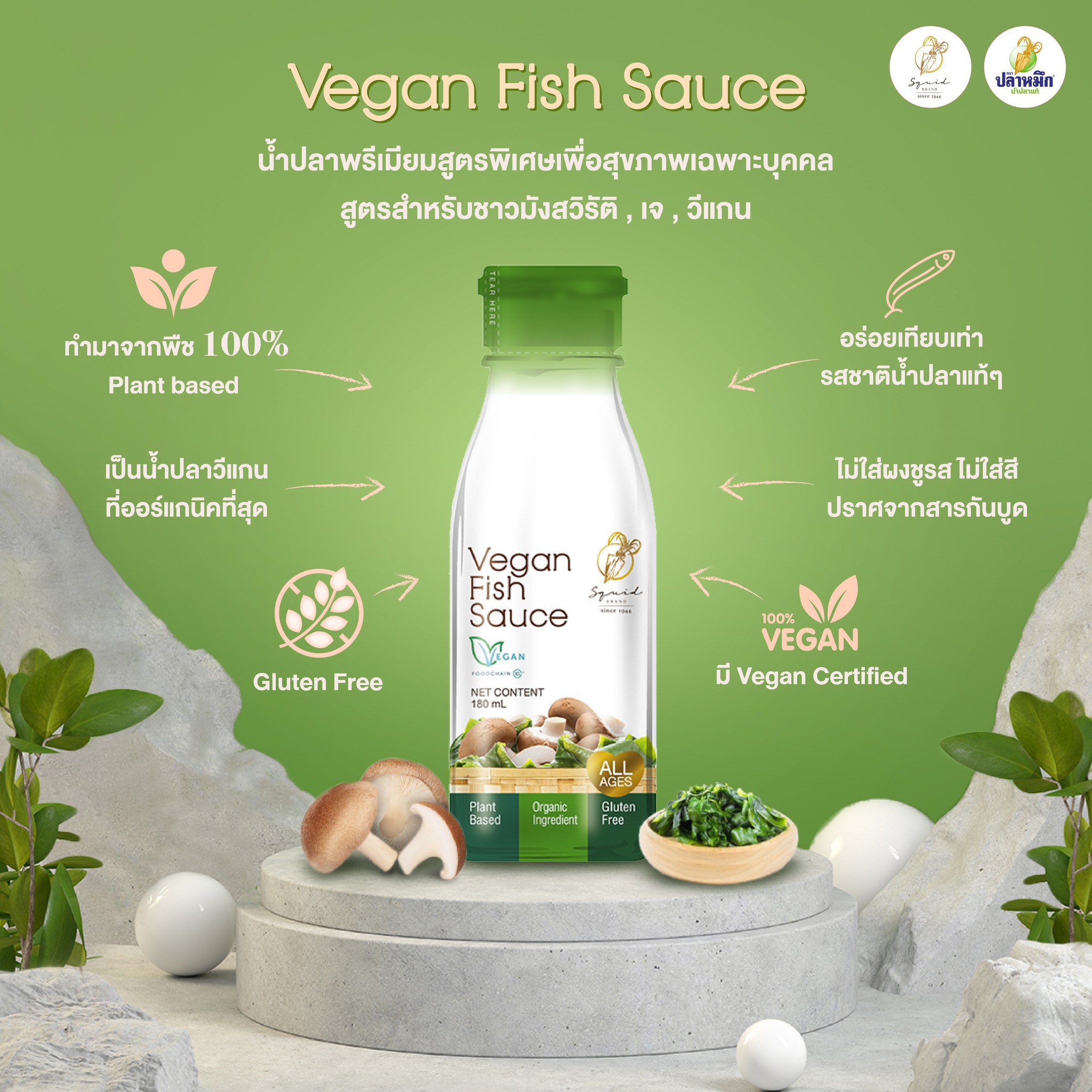
The key ingredients include premium kombu seaweed from Korea and organic shiitake mushroom extract. These ingredients help create a deep umami taste, pleasant aroma, and well-rounded flavor close to traditional fish sauce.
This plant-based fish sauce contains no seafood or animal-derived ingredients. It is also free from the five pungent vegetables, making it suitable for J-Food consumers. In addition, it is Gluten Free, contains no preservatives, no MSG, no artificial colors, and no added artificial fragrance.
Whether used in stir-fried dishes, spicy salads, soups, curries, or fried dishes, it helps turn simple vegetable-based meals into flavorful dishes with greater depth and aroma.
Why Is Squid Brand Plant-Based Fish Sauce a Good Choice for Health-Conscious Consumers?
Squid Brand Vegan Fish Sauce was created to deliver a taste as close as possible to traditional fish sauce by combining the umami power of kombu seaweed and shiitake mushroom extract.
This gives the sauce a well-balanced savory taste and aroma that can be used across many types of Thai dishes, including soups, stir-fries, curries, fried dishes, and spicy salads.
With the long-standing expertise of Squid Brand, every bottle is produced with attention to quality, cleanliness, and food safety. The product is made through a natural fermentation process and uses carefully selected ingredients to meet the needs of modern health-conscious consumers.
Most importantly, it is Gluten Free, contains no MSG, and is free from preservatives. This makes it more than just a seasoning — it is a safer and more mindful choice for people who care about both taste and well-being.
Choosing Squid Brand plant-based fish sauce is not only about choosing an alternative seasoning. It is about choosing a trusted standard that allows every meal to remain flavorful, clean, and suitable for J-Food, Vegan, and Vegetarian lifestyles.
Frequently Asked Questions
No. Regular fish sauce is made from real anchovies, which are animal-derived ingredients. For J-Food consumers, we recommend using Squid Brand plant-based fish sauce instead, as it is made from natural ingredients with no animal-derived components and no five pungent vegetables.
Squid Brand plant-based fish sauce is developed to deliver umami flavor and well-balanced saltiness as close to real fish sauce as possible. It helps add aroma and depth to food better than using only salt or soy sauce.
Vegan is stricter. Vegans avoid all animal-derived products, including milk, eggs, and honey. Vegetarians avoid meat, but many still consume milk or eggs. Both groups can use plant-based fish sauce for cooking.
Squid Brand plant-based fish sauce is designed to be Gluten Free, making it suitable for people who avoid gluten or care about healthier food choices.