
With more people embracing healthier lifestyles, the plant-based diet has become a global movement — not only among health enthusiasts but also among professional chefs and new-generation consumers who care about sustainable eating.
In Thai cuisine, known for its rich and balanced flavors, one key seasoning is fish sauce. But for those who follow vegetarian or plant-based diets, how can they recreate the same authentic Thai taste? Can regular fish sauce be used? Or should they look for a healthier, plant-based alternative that aligns with modern ethical eating?
Squid Brand explores the answers in this article.
Understanding “Plant-Based” vs. “Vegetarian”
Before discussing plant-based fish sauce, it’s important to understand that plant-based and vegetarian are not exactly the same.
– Vegetarian diets exclude all kinds of meat, but some groups still consume animal-derived products such as eggs, milk, or butter.
– Plant-Based diets focus almost entirely on plants (whole foods plant-based) and completely avoid animal products, including fermented seasonings that contain fish.
Therefore, traditional fish sauce, which is made by fermenting sea fish, is not suitable for strict vegetarians or plant-based eaters even in small amounts.
What Is “Plant-Based” or “Healthy Fish Sauce”?
Plant-Based Fish Sauce is a seasoning developed to replicate the umami flavor of traditional fish sauce without using any fish or animal ingredients. Its main components typically include
- Fermented soybeans
- Seaweed
- Dried shiitake mushrooms
- Natural sea salt and a touch of natural sugar
The fermentation and seasoning process are designed to mimic the aroma and taste of real fish sauce as closely as possible, making it perfect for those who want authentic Thai flavors while staying true to vegetarian or plant-based principles.
Can Plant-Based Fish Sauce Really Replace Regular Fish Sauce?
The answer is yes, but it depends on the dish and the desired flavor profile.
– For dipping sauces and salads: Plant-based fish sauce offers a similar balanced saltiness to real fish sauce, nearly a 100% substitute.
– For stir-fries or soups: The flavor may be slightly milder; you can increase the amount or add a bit of light soy sauce to adjust the taste.
– For dishes requiring a distinct fish aroma: Such as Nam Pla Prik (chili fish sauce) or certain curries, traditional fish sauce still gives deeper flavor. However, health-conscious consumers can choose low-sodium fish sauce as a balanced alternative.
Overall, plant-based fish sauce can be used as a substitute for traditional fish sauce in almost any dish especially for those who want to enjoy the full, authentic flavors of Thai cuisine while maintaining a sustainable vegetarian or plant-based lifestyle.
Recommended: Squid Brand Vegan Fish Sauce
To meet the growing global demand for vegetarian and plant-based food, Squid Brand has developed its own Vegan Fish Sauce, specially crafted for those who do not consume meat including vegans, vegetarians, and those observing jay (Thai vegan) diets while preserving the authentic umami taste of traditional Thai fish sauce.
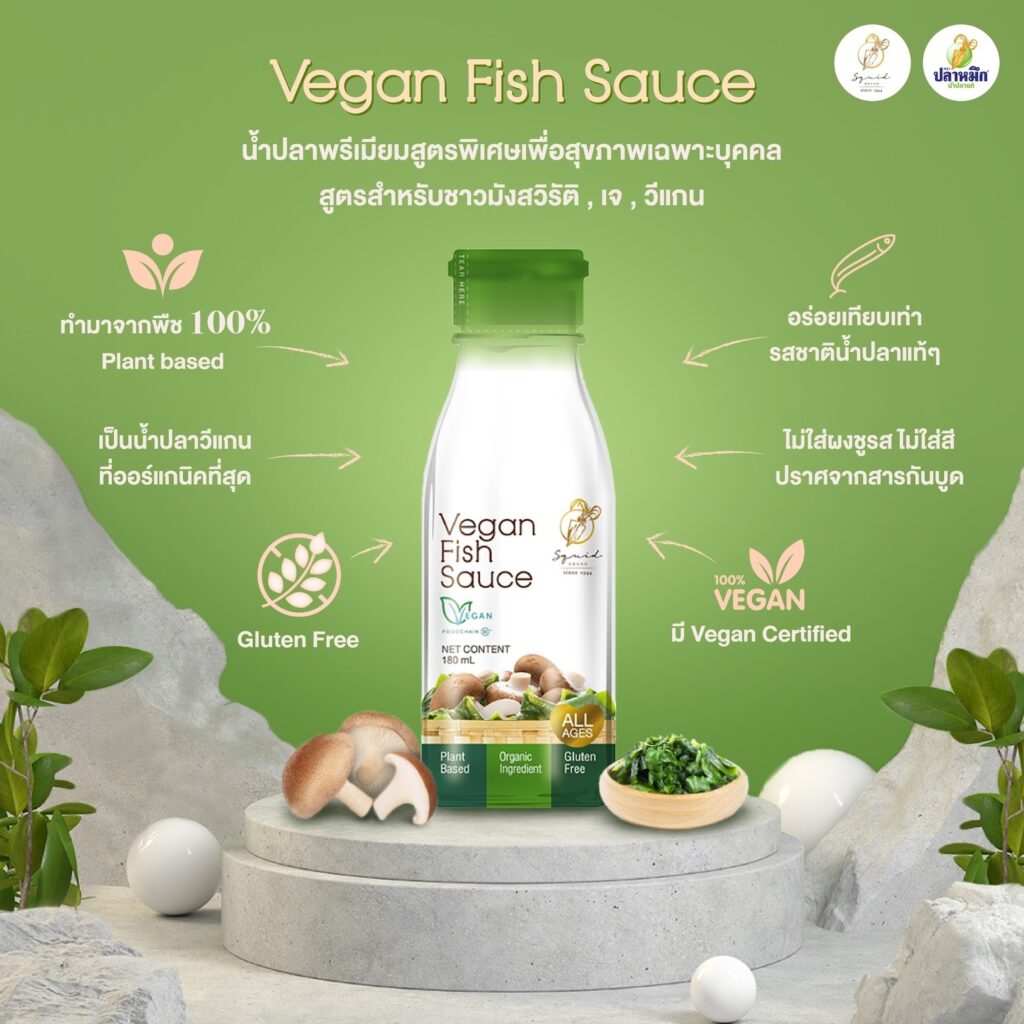
- 100% free from fish or animal ingredients
- Ideal for strict plant-based and vegetarian eaters
- Naturally fermented from premium ingredients, using Korean kombu seaweed and high-quality shiitake mushrooms for natural umami, deep aroma, and smooth saltiness
- No MSG or preservatives, offering rich, authentic flavor suitable for every healthy meal
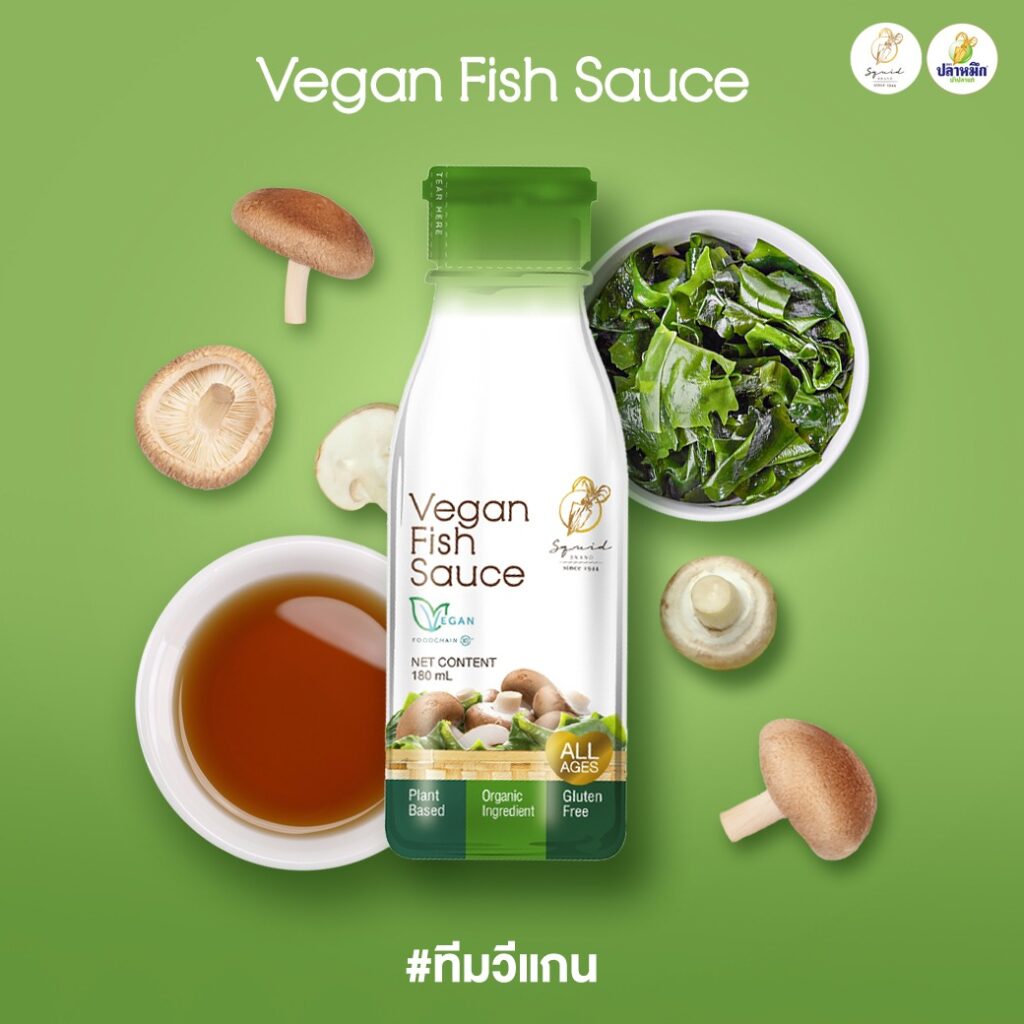
Squid Brand Vegan Fish Sauce is the perfect choice for modern consumers who love authentic Thai taste while embracing a healthy, sustainable lifestyle.
Its umami depth from mushrooms and seaweed delivers true Thai flavor without fish making it a great healthy alternative for anyone reducing animal products. With every drop, you can enjoy authentic Thai taste while caring for your health and the planet at the same time.