
Truffle fish sauce is a seasoning that combines the distinctive character of authentic fish sauce with the unmistakable aroma of truffles. It allows fine-dining restaurants to elevate fusion dishes, pasta, risotto, and sauces with deeper aroma, balanced umami, and greater complexity in every bite.
Behind every carefully crafted truffle dish in a fine-dining restaurant, even the smallest details matter—from the level of saltiness and the aroma that reaches the nose to the gradual development of umami on the palate. Seasonings therefore do more than simply add flavor; they help bring all elements of a dish together and define its overall character.
Truffle fish sauce made with naturally brewed fish sauce has become an ingredient that gives chefs more room for creativity. By combining the distinctive fragrance of truffles with a well-rounded savory taste, it can be applied across a wide variety of dishes.
The key is not to use a large amount, but to understand where, when, and with which ingredients it should be used. When applied correctly, truffle aroma can enhance a dish without overpowering its main ingredients. This article explores how truffle fish sauce can be used in a professional kitchen, practical cooking techniques, and truffle dish ideas that restaurants can incorporate into their menus.
What Is Truffle Fish Sauce?
Truffle fish sauce is a seasoning that combines the distinctive characteristics of fish sauce with the unique aroma of truffles. It adds savory depth, umami, and aromatic complexity to a dish at the same time.
Its strength is not simply its ability to add truffle fragrance. It can also enhance the natural flavors of key ingredients, creating greater depth and a more balanced overall taste.
In the kitchen, truffle fish sauce can be used in many more ways than conventional fish sauce. It can be incorporated into sauces, meat marinades, seafood dishes, pasta, or used as a finishing seasoning just before serving. It is particularly useful in dishes that require both aroma and umami without relying on too many different seasonings, which could otherwise make the flavor unnecessarily complicated.
One of its key advantages is its ability to bring together the natural umami and balanced savory character associated with Thai fish sauce and the rich, distinctive fragrance of truffles. This versatility allows both professional chefs and passionate home cooks to use it creatively across a variety of cuisines, from bold Thai and Asian dishes to refined Western cuisine, while allowing the main ingredients to retain their individual character.
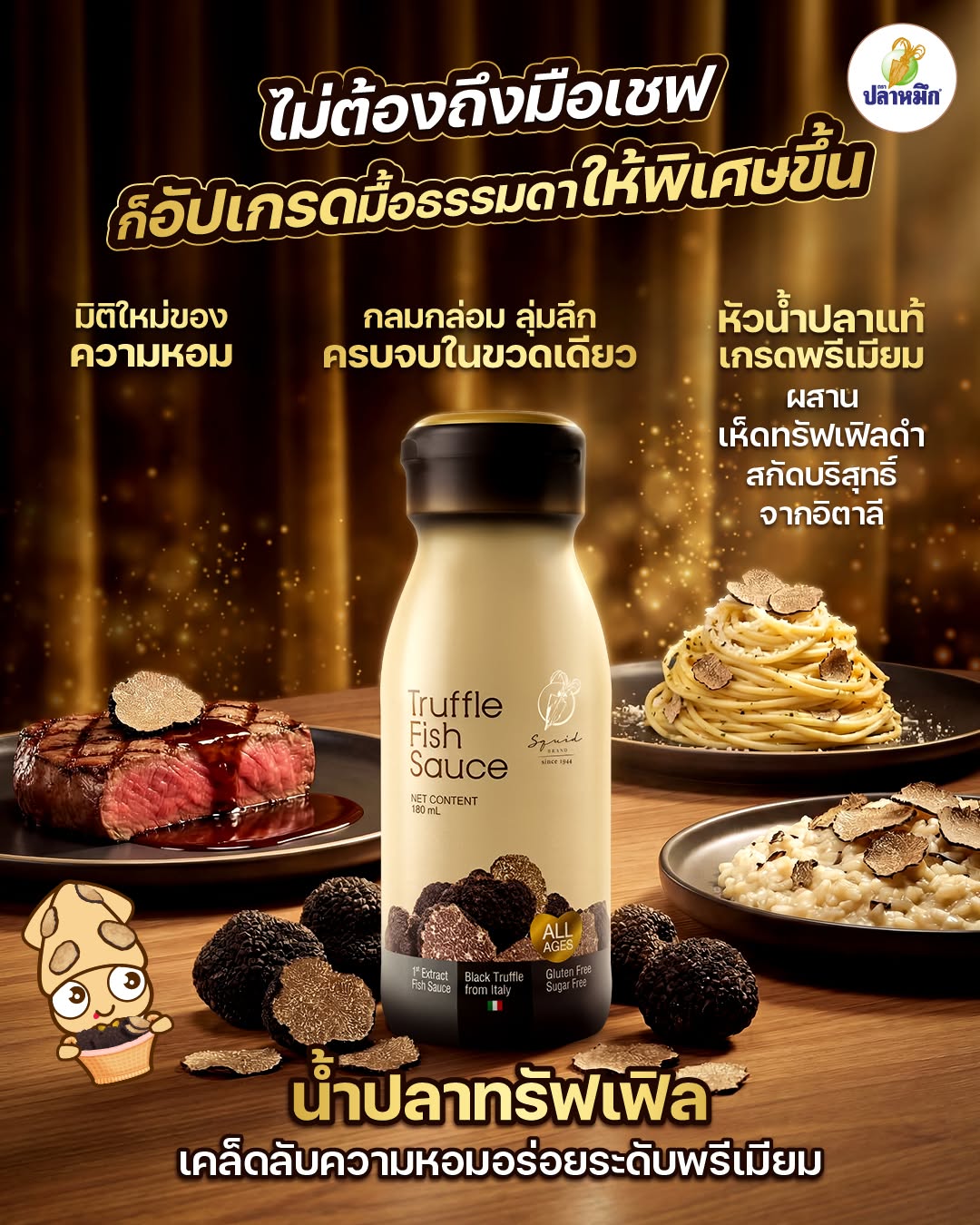
How Is Truffle Fish Sauce Used in Fine Dining? Tips for Elevating Truffle Dishes
Modern fine dining increasingly combines Western ingredients with Eastern culinary traditions. One approach attracting the attention of professional chefs is pairing distinctive Western aromas with the deep, savory flavors commonly found in Asian cuisine.
This is particularly relevant in fine-dining restaurants looking to introduce new dimensions of flavor and aroma to their dishes.
Truffle fish sauce can therefore serve as much more than a seasoning. It can act as a bridge that brings different elements of a dish together. It can be used in sauces for meat or seafood, added to pasta and risotto, or applied as a finishing touch just before serving.
It is especially suitable for truffle dishes that aim to feel luxurious and sophisticated while maintaining a delicate, balanced flavor rather than becoming overly rich or heavy.
The key to using it like a professional chef lies in getting the quantity right. Truffles have a powerful aroma, while fish sauce contributes both savory complexity and intense umami.
When added at the right stage and in an appropriate amount, these two components can enhance a dish without overwhelming its main ingredients. The result is deeper flavor, greater aromatic complexity, and the refined balance expected from fine-dining cuisine.
Why Do Fine-Dining Chefs Pair Truffle Fish Sauce with Truffle Dishes?
Fine dining is not simply about creating something unusual. It is about carefully balancing flavors so that all components of a dish work together.
Umami plays an important role in connecting these elements and creating greater depth and harmony. Truffles have a distinctive aroma with earthy, mushroom-like, and deeply aromatic notes. However, when used on their own, they may still benefit from an additional source of savory depth and umami that helps bring out the flavors of the other ingredients on the plate.
Truffle fish sauce is therefore well suited to flavor design in a fine-dining kitchen. It combines the aroma of truffles with the balanced savory character and umami of authentic fish sauce, adding depth without requiring numerous additional seasonings.
When used in appropriate amounts, it can harmonize the flavors of meat, seafood, mushrooms, eggs, cheese, and sauces while still allowing the primary ingredients to maintain their own identities.
Chefs may also prefer naturally brewed fish sauce produced through 100% traditional fermentation without artificial chemical flavoring. Its smooth, well-rounded taste pairs naturally with the fragrance of truffles without overpowering the aroma of other premium ingredients.
It can be incorporated into sauces and marinades, used to season pasta and risotto, or added toward the end of cooking to preserve the truffle aroma. This makes it particularly suitable for truffle dishes that require fragrance, balance, and layers of flavor in every bite.
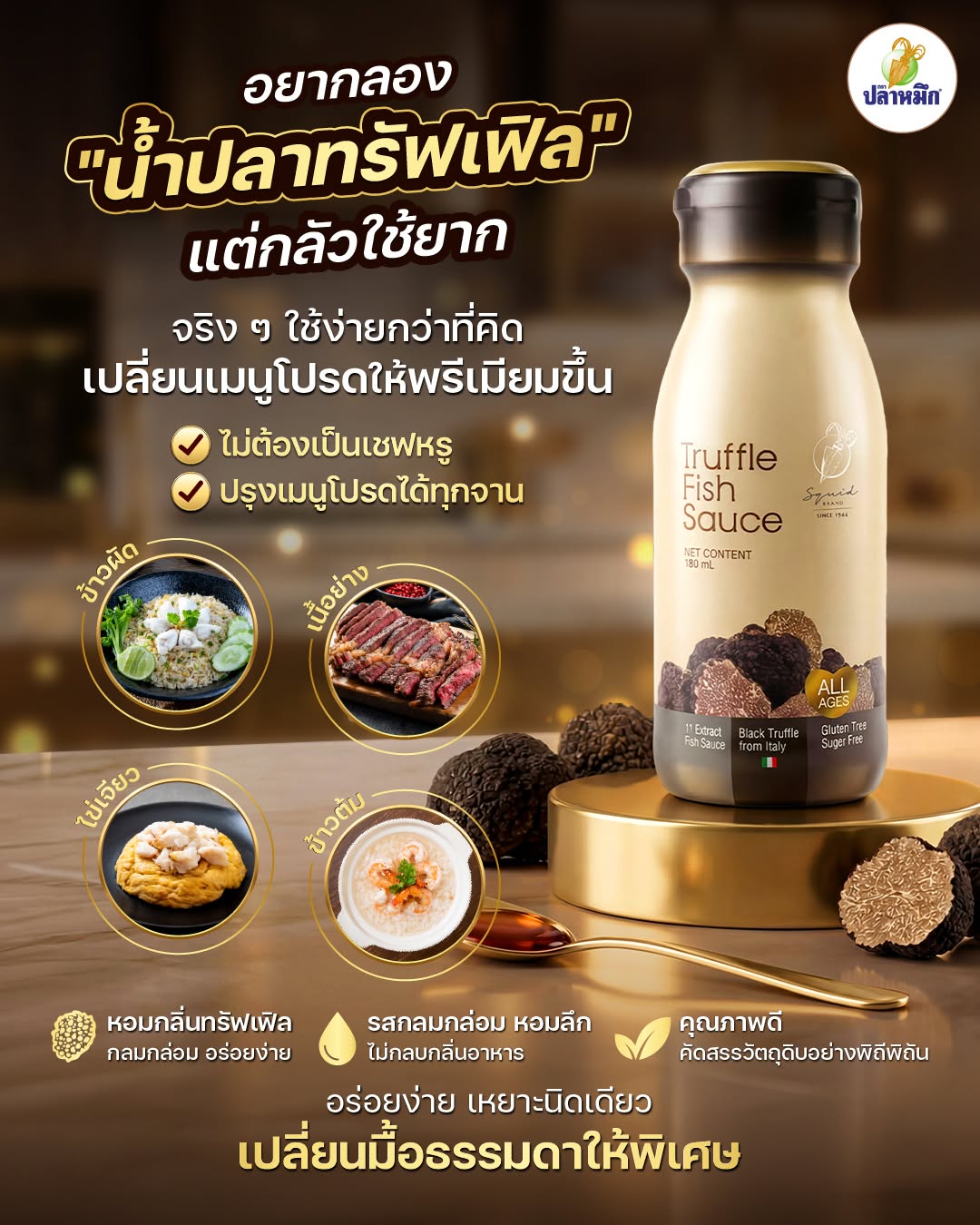
3 Ways to Create Truffle Dishes with Truffle Fish Sauce in a Professional Kitchen
Using truffle fish sauce effectively requires an understanding of proportion, temperature, and the order in which ingredients are added.
Truffle aromas are relatively delicate, while fish sauce contributes both savory flavor and umami. Adding each element at the right moment allows them to complement one another without allowing either flavor to overpower the main ingredient.
1. Cold Sauces and Dressings
For refined salads or beef carpaccio, chefs can combine truffle oil with truffle fish sauce, lime or lemon juice, and black pepper to create a light, aromatic dressing with considerable depth.
Its balanced savory flavor helps enhance the main ingredients without requiring additional MSG.
Cold dressings also help preserve the freshness of the ingredients while lightly coating their surfaces and giving them an appealing sheen. Mixing the dressing at room temperature can help reduce the rapid evaporation of volatile truffle aromas, allowing each bite to retain a fresh yet premium aromatic character.
2. Marinades for Meat-Based Main Courses
Beef and duck served in high-end restaurants are often marinated to develop tenderness and allow flavors to penetrate more deeply.
Adding a small amount of truffle fish sauce to a marinade introduces an Asian-inspired savory dimension and gives truffle dishes a richer, more complex aroma as they cook.
The meat absorbs both aromatic compounds and umami during the marinating process, helping create a juicy and distinctive final result. As the meat is grilled or roasted, the aroma develops further and spreads through the dish, contributing to a more layered sensory experience.
3. Soups and Risotto
Dishes such as truffle risotto rely on gradually building flavor throughout the cooking process.
Adding a small amount of truffle fish sauce to the stock or during the middle stages of cooking allows the rice to absorb savory depth and umami evenly, creating a more complex flavor in every bite.
For dishes where a more pronounced truffle aroma is desired, part of the truffle fish sauce can be reserved and added near the end of cooking after the heat has been reduced. This helps preserve the aromatic qualities of the truffle while preventing the risotto from becoming overly intense or heavy.
Using truffle fish sauce when preparing sauces, marinades, soups, or other favorite dishes can transform familiar recipes into premium creations with greater depth, balance, and aromatic complexity—helping create a memorable dining experience for every guest.
Conclusion
When experimenting with truffle fish sauce in a professional kitchen, it is often better to begin with dishes that are already on the menu rather than creating entirely new recipes immediately.
Start by identifying one component where truffle fish sauce could replace or complement an existing seasoning, such as butter sauce, mushroom sauce, salad dressing, or a meat marinade. Then test different concentrations and taste the dish both while it is hot and again at its actual serving temperature.
The next step is to taste the seasoning together with all the other components on the plate. A sauce that seems perfectly balanced on its own may taste different once paired with meat, cheese, vegetables, or other accompaniments.
Finally, decide when you want the truffle aroma to appear.
If you want the aroma to make an immediate impression as the food reaches the diner, add a few drops as a finishing touch just before serving.
If you prefer a softer truffle aroma that remains in the background and supports the overall flavor, incorporate it into a sauce or marinade earlier in the cooking process.
Choosing high-quality ingredients that combine the balanced flavor of naturally brewed fish sauce with the unmistakable aroma of truffles can make truffle fish sauce an integral part of flavor design rather than simply another seasoning.
Using Squid Brand Truffle Fish Sauce can help bring greater aromatic depth and savory balance to truffle dishes, creating memorable flavors that leave a lasting impression on diners.
FAQ
Q: How is truffle fish sauce different from regular fish sauce?
A: Truffle fish sauce combines the distinctive aroma of truffles with the balanced savory flavor of authentic fish sauce. This makes it especially suitable for European-inspired cuisine and fusion dishes that require a more refined, luxurious aromatic profile.
Q: Which types of truffle dishes work best with truffle fish sauce?
A: It works particularly well with pasta, risotto, creamy soups, and steak sauces. Its savory flavor and umami can help balance richness while enhancing the natural aroma of truffles.
Q: Will truffle fish sauce clash with other aromas in a dish?
A: When used in an appropriate quantity, particularly when choosing a naturally fermented product, it should not create conflicting aromas. Instead, it can help connect the truffle fragrance with the other flavors in the dish, creating a more balanced and harmonious overall profile.
Bringing together different culinary traditions through carefully selected ingredients can open up entirely new dining experiences.
For those looking to elevate a special meal with deeper aroma, sophisticated umami, and the balance associated with professional cooking, choosing products from Squid Brand, a brand dedicated to careful natural fermentation, can help create memorable flavors in every dish.