
Salty” is the foundational flavor that brings Thai cuisine to life. From the Prik Nam Pla (chili fish sauce) drizzled over a fried egg to bold Tom Yum, tender Green Curry, or even a simple hot omelet—these dishes would lose their soul without fish sauce to enhance their flavors. Thai food culture has been intertwined with saltiness for generations. Sometimes, we season our food so habitually that we forget the hidden danger lurking within that deliciousness: Sodium. Sodium consumption among Thais is rising at a worrying rate, potentially leading to chronic diseases we wouldn’t wish upon ourselves or our loved ones.
The human body should ideally consume no more than 2,000 mg of sodium per day, which is equivalent to just one teaspoon of salt. In reality, just a few dashes of fish sauce on your favorite dish can nearly exhaust your entire daily quota. This has created a new challenge for health-conscious individuals who don’t want to sacrifice flavor for blandness. Enter Low Sodium Fish Sauce—a healthy alternative designed specifically to reduce health risks while keeping your meals delicious.
This article will answer the questions many healthy foodies are asking: Between your familiar bottle and the low-sodium version, which one is truly “right” for your body? Does the reduction in sodium mean a loss of flavor? Let’s find out together so you can choose a healthy fish sauce that fits your lifestyle without saying goodbye to deliciousness.
Getting to Know Them: Regular vs. Low Sodium
Regular Fish Sauce is a staple of Thai kitchens born from ancient food preservation wisdom. It is produced through a natural fermentation process using fresh anchovies mixed with a high concentration of salt until it becomes a clear, golden-amber liquid. It offers a distinct, bold saltiness and a strong, unique aroma that enhances traditional flavors, but it comes with a high sodium content per serving.
Low Sodium Fish Sauce, on the other hand, is developed specifically for health enthusiasts. By selecting specific ingredients and using special production processes, the sodium content is reduced by 20–40% compared to standard formulas. Despite the lower salt content, it maintains a mellow aroma and natural umami profile. It serves as a healthy alternative that makes controlling salt intake easier without ruining the dining experience.

Head-to-Head Comparison: Regular vs. Low Sodium
To give you a clearer picture, here is a direct comparison of their features:
| Feature | Regular Fish Sauce | Low Sodium Fish Sauce |
| Sodium Content | Standard traditional levels; bold saltiness. | Reduced by ~20–40%; better for salt control. |
| Main Ingredients | Anchovies and Salt. | Anchovies and Salt (formula adjusted with salt substitutes). |
| Flavor Profile | Intense saltiness; deep, traditional aroma. | Mellow saltiness; well-balanced and smooth. |
| Price | Affordable (approx. 30–60 THB). | Slightly higher due to R&D (approx. 40–125 THB). |
Pros and Cons: What You Need to Know
Understanding the trade-offs will help you plan your health journey more effectively.
Regular Fish Sauce
- Pros: Budget-friendly and widely available. Its intense flavor and strong aroma mean you only need a small amount to get that familiar taste. It is perfect for stir-fries or curries that require that signature “salty kick.”
- Cons: Very high in sodium. Excessive consumption is a major risk factor for high blood pressure, kidney disease, and water retention (bloating).
Low Sodium Fish Sauce
- Pros: Acts as a cornerstone for sodium control, reducing the workload on the kidneys and heart. It is ideal for weight management and reducing bloating. If you choose Squid Brand Low Sodium, you also get a 100% naturally fermented, Gluten-Free product with no MSG, no preservatives, and no artificial colors or flavors.
- Cons: The saltiness may feel slightly “lighter,” which might lead some people to over-season their food. Additionally, some brands use potassium salt as a substitute; patients with specific stages of kidney or heart disease should consult a doctor before use.
Decision Guide: Who Should Choose Which?
Choose Regular Fish Sauce if you…
Are in good health with no medical conditions requiring sodium restriction and, most importantly, possess high seasoning discipline. If you can control your portions—using “a little for a lot of flavor”—you can enjoy the traditional taste without exceeding daily limits. It’s also the best choice for those prioritizing convenience and budget.
Choose Low Sodium Fish Sauce if you…
Are focused on self-care, whether you are a fitness enthusiast, managing weight, or dealing with hypertension. Switching to low sodium is a great long-term health investment. Squid Brand offers specialized formulas for specific needs:
- Mild Fish Sauce for Kids: Designed for children aged 2 and up. It protects developing kidneys and prevents kids from becoming “addicted” to salty flavors. It uses Monk Fruit for natural sweetness, is rich in Vitamin B12 and GABA, and is 100% natural and Gluten-Free.
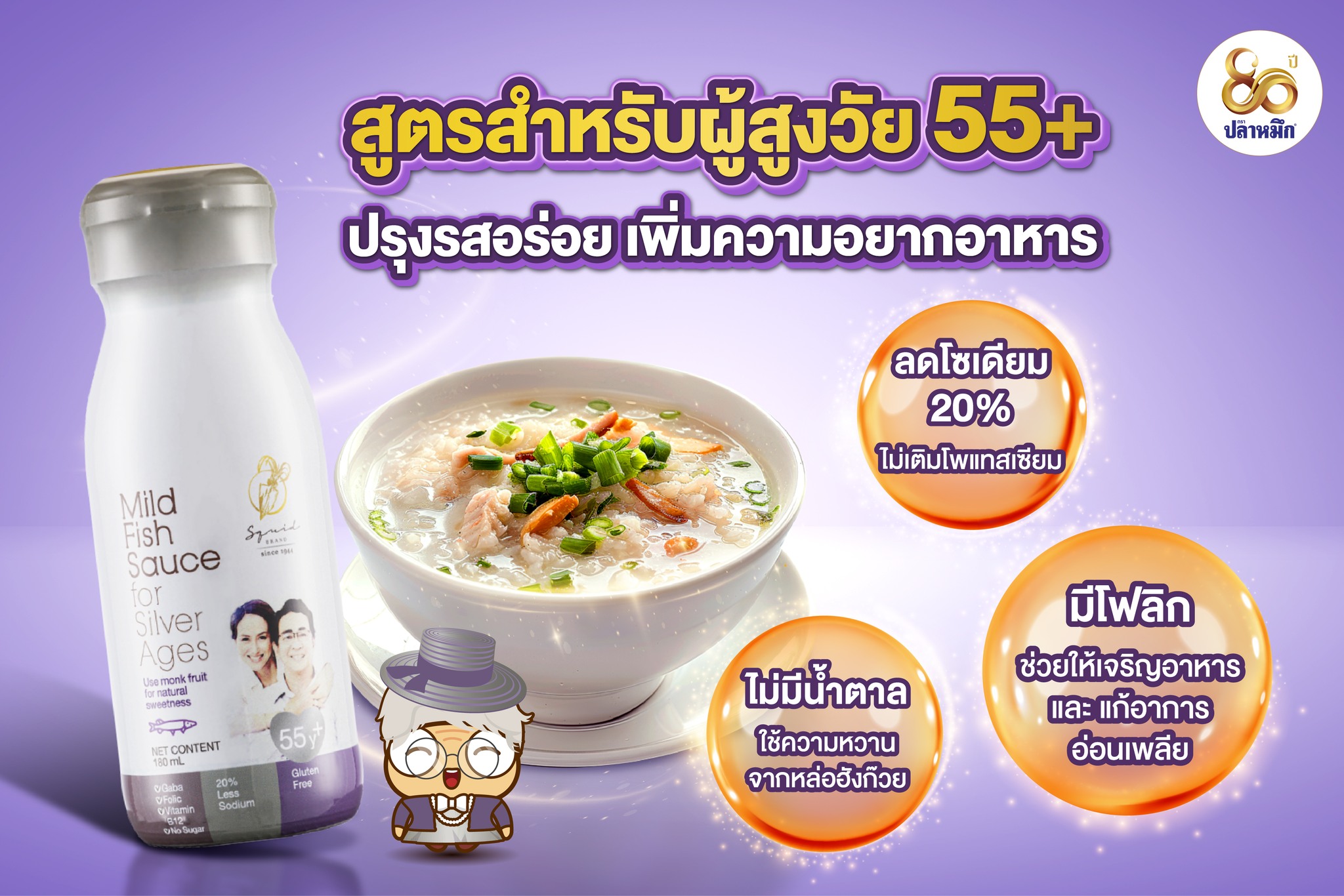
- Mild Fish Sauce for Silver Ages: Developed for seniors who need to monitor blood pressure and kidney function. It retains umami and Vitamin B12, Folic Acid, and GABA, while remaining clean and free of harsh fishy odors.

Pro-Tips from Squid Brand: How to Use Fish Sauce Effectively
- Check the GDA Label: Before putting a bottle in your cart, look at the “Sweet, Fat, Salty” label. Comparing sodium values takes only seconds but helps you stay within your “salt budget.”
- The “Switch” Technique: You don’t have to choose just one. Use Squid Brand Gold for soups or curries where you need deep flavor, but switch to Mild Fish Sauce (Low Sodium) for dipping sauces or Prik Nam Pla, where the sauce is consumed directly.
- Match the Formula to the Goal: If you want restaurant-quality premium flavor, go for Squid Brand Gold (fermented for 18 months). If you are cooking for children, the elderly, or your own long-term health, Mild Fish Sauce is the ultimate answer.
Frequently Asked Questions (FAQ)
A: Not at all. It is just more mellow. It provides a balanced umami that works beautifully when paired with fresh herbs and other ingredients.
A: No. Some brands use different techniques or natural fermentation adjustments. Always read the label if you have specific medical restrictions regarding potassium.
A: Not necessarily. It’s about balance. You can use regular sauce for high-heat cooking and low sodium for table seasoning to keep your total daily intake in check.
A: The production process is more complex, involving higher-quality ingredients and innovation to reduce sodium while maintaining a 100% natural, Gluten-Free, and MSG-free profile.